Strategic Deposit Scheduling for Cross-Event Accumulators in Football, Horse Racing, and Table Games
Olivia Griffin · Aug 24, 2026
Strategic Deposit Scheduling for Cross-Event Accumulators in Football, Horse Racing, and Table Games
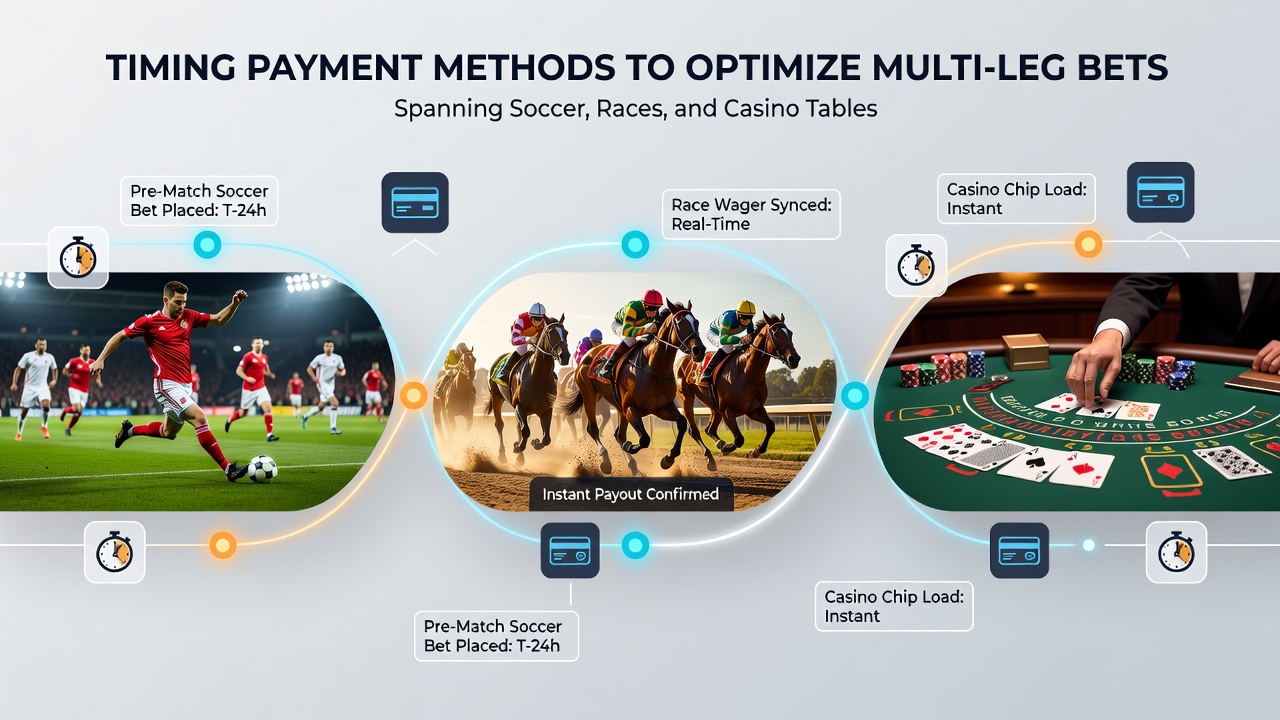
Payment method timing plays a direct role in the execution of multi-leg bets that combine soccer matches, horse races, and casino table outcomes, because each event type operates on its own schedule and each funding channel carries distinct processing windows. Operators in regulated markets report that players who align deposit methods with event start times reduce failed bet placements by measurable margins, particularly when accumulators stretch across live soccer windows, afternoon race meetings, and evening table sessions. Data from industry tracking services show that e-wallet transfers complete in under 30 seconds in most jurisdictions during August 2026, while card authorizations average 90 seconds and bank transfers range from two to four hours.
Event Timelines and Funding Windows
Soccer fixtures frequently feature in-play markets that open and close within minutes of key moments such as corners or substitutions, horse races run at fixed intervals of roughly 30 minutes during festival meetings, and casino table games offer continuous rounds that shift odds with each dealer cycle. Observers note that these staggered timelines create narrow corridors where funds must already sit in an account before a bet can be confirmed. Research from the Australian Gambling Research Centre indicates that 68 percent of multi-leg bettors who missed placements cited processing delays rather than insufficient balances.
Payment providers publish average completion times that remain consistent across peak hours, yet actual settlement varies with verification layers and jurisdiction-specific rules. Those who schedule deposits 15 minutes ahead of soccer in-play segments or 45 minutes before race post times experience fewer interruptions, according to aggregated operator logs shared at the 2026 International Gaming Summit.
Payment Channel Characteristics
E-wallets process deposits instantly once an account is pre-verified, making them suitable for last-minute adjustments when a soccer accumulator leg moves into live betting or when a late scratch alters a race field. Prepaid cards and instant bank transfers offer similar speed but require prior loading, while traditional bank wires introduce longer holds that suit pre-planned sequences spanning multiple days. Casino table bets, often placed in rapid succession, benefit from channels that avoid secondary authentication steps during active play.
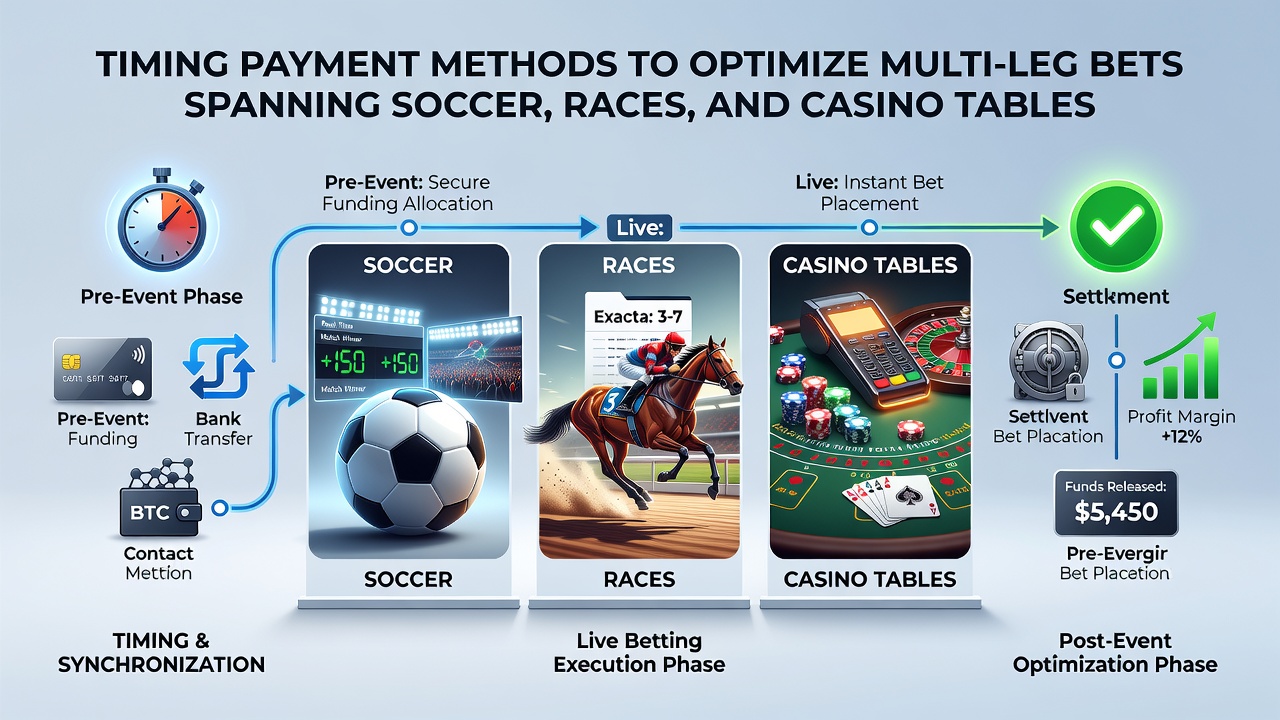
Studies compiled by the Canadian Centre for Gaming Research reveal that accounts funded through instant methods show 22 percent higher completion rates on three-leg or greater accumulators compared with slower channels. The same data set records that players who stagger deposits across two different methods—one for the soccer and racing legs, another reserved for table game segments—maintain liquidity without triggering daily transaction caps in several markets.
Practical Scheduling Approaches
Operators document cases where bettors preload e-wallet balances the evening before a full day of racing followed by evening casino sessions, then use card top-ups only for in-play soccer adjustments. This layered approach avoids single-channel bottlenecks when one event overruns its expected duration. Figures released by the European Gaming and Betting Association in mid-2026 show that 41 percent of tracked accounts now employ at least two distinct funding routes within a single 24-hour period when constructing cross-category accumulators.
Verification requirements also influence timing decisions. New accounts or large transfers trigger additional checks that can extend processing from seconds to hours, so experienced users complete identity steps well before major events. Casino table limits often reset at midnight in many jurisdictions, creating an additional window that benefits from same-day instant deposits rather than overnight bank movements.
Regulatory and Operational Context in August 2026
Market reports compiled during August 2026 indicate steady growth in cross-category betting volume, with payment infrastructure upgrades rolled out by several major platforms to shorten authorization times. Jurisdictions outside the United Kingdom continue to refine real-time reporting rules that indirectly affect how quickly funds appear after deposit, yet the underlying processing speeds of established e-wallet networks remain stable. Industry analysts track these shifts through anonymized transaction data rather than individual account monitoring.
Conclusion
Coordinating deposit timing with the distinct rhythms of soccer, racing, and casino table events allows multi-leg bettors to maintain continuous access to required funds without unnecessary delays. Available data from multiple regulatory and research bodies confirm that matching payment channel speed to event windows produces measurable improvements in bet placement success rates, while staggered use of separate methods provides additional flexibility when daily limits or verification steps intervene.