Real-Time Broadcast Integration Drives Accumulator Bets in Multiple Sports and Gaming Venues
Olivia Griffin · Oct 20, 2026
Real-Time Broadcast Integration Drives Accumulator Bets in Multiple Sports and Gaming Venues
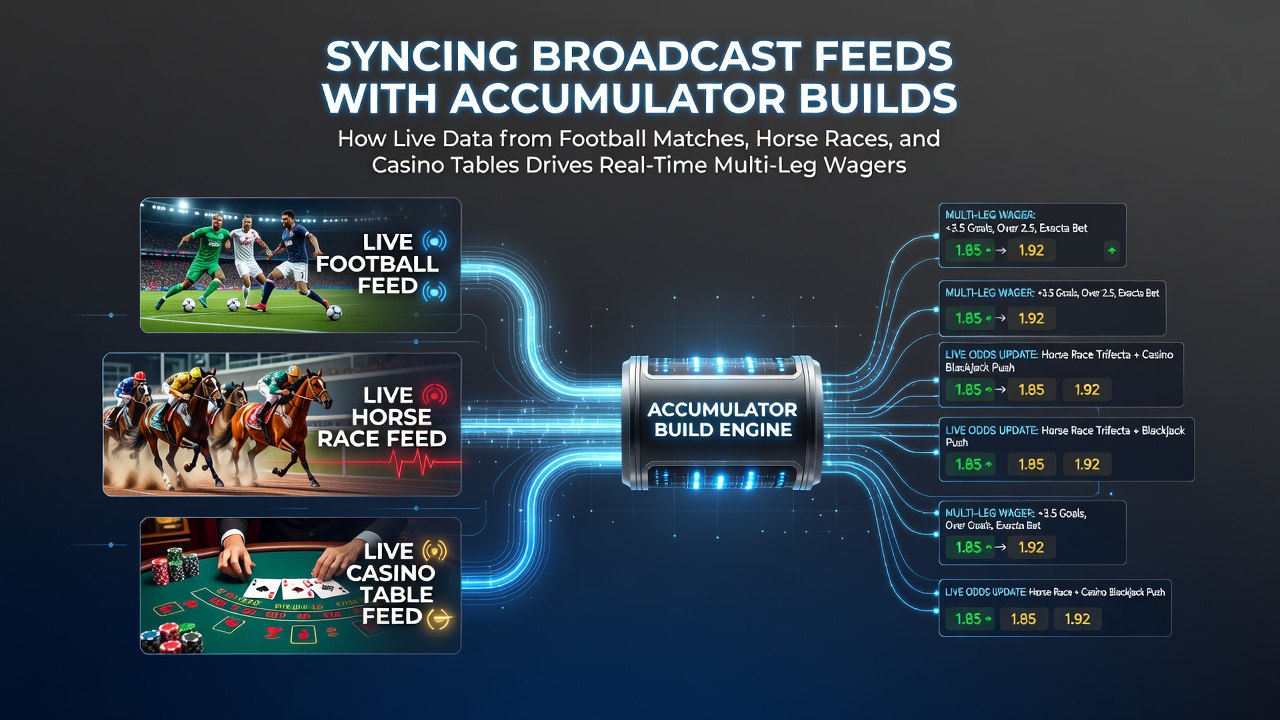
Data from broadcast signals now feeds directly into accumulator platforms, allowing bettors to construct multi-leg wagers while events unfold in October 2026. Operators pull timing codes, score updates, and positional metrics from official feeds, then push those values into live odds engines without delay. This connection turns a single goal, a mid-race surge, or a roulette spin into an immediate adjustment across linked selections.
Football matches supply the clearest example. When a striker scores, the broadcast data packet reaches the bookmaker server in under two seconds, recalculating every accumulator that includes that team to win or over total goals. Bettors who have already locked in three legs can add a fourth selection on the next corner or card while the match continues, because the system recognizes the new state instantly.
Live Metrics From the Track and the Table
Horse racing broadcasts deliver frame-by-frame location data that updates accumulator legs built around finishing positions or sectional times. A horse that moves from fourth to second at the final bend triggers an automatic recalculation for any multi-leg ticket that includes that runner. Platforms combine this positional stream with starting-price logic so that later legs remain available for addition even after earlier races have concluded.
Casino tables operate on a similar principle. Live dealer streams send card values and wheel outcomes to central servers that power accumulator products spanning multiple table games. A player who places a parlay across blackjack, roulette, and baccarat can watch each outcome register in sequence, with the running payout figure adjusting after every resolved hand or spin. The same feed also supports cross-category accumulators that mix a football goal with a horse race result and a casino over-under, because all three data sources share standardized time stamps.
Technical Architecture Behind the Sync
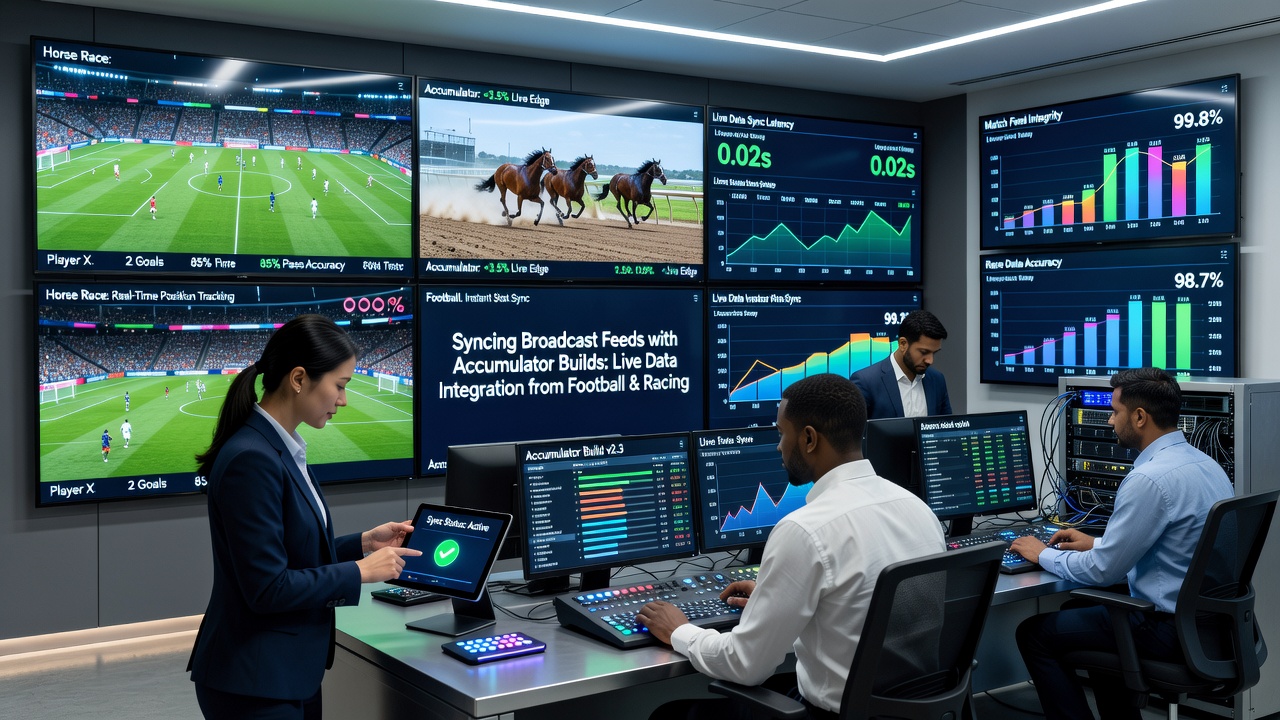
Modern systems rely on low-latency APIs that ingest video metadata alongside official league or track data. A central matching engine aligns broadcast timestamps with betting market states, then distributes revised odds to mobile and desktop clients. Observers note that this architecture has reduced the average delay between on-screen events and updated accumulator totals from several seconds to under one second in major European and North American markets.
Operators also maintain redundant data paths. When a primary broadcast feed experiences packet loss, the system switches to secondary sources such as league-supplied XML streams or track timing chips. This redundancy keeps accumulator builders functional even during brief signal interruptions, a requirement highlighted in technical guidelines issued by the Pennsylvania Gaming Control Board.
Market Growth and Regulatory Context
Industry reports show that real-time accumulator volume has risen steadily since 2024. A study released by the American Gaming Association documented increased handle on live multi-leg products across sportsbooks that integrate broadcast feeds. Regulators in several jurisdictions now require operators to demonstrate that accumulator interfaces display updated probabilities accurately and that bet confirmation occurs only after the latest data packet has been applied.
Software vendors have responded by releasing modular feed handlers that accept inputs from football leagues, racing authorities, and casino management systems through a single protocol. These handlers allow smaller operators to offer the same accumulator depth previously available only to large international platforms.
Conclusion
Broadcast synchronization has become a core component of accumulator construction across football, horse racing, and casino environments. As data pipelines continue to shorten the interval between live events and market updates, platforms can maintain continuous multi-leg wagering without manual intervention. The technical and regulatory frameworks now in place support this expansion while preserving the requirement for accurate, timely information at every stage of the bet cycle.